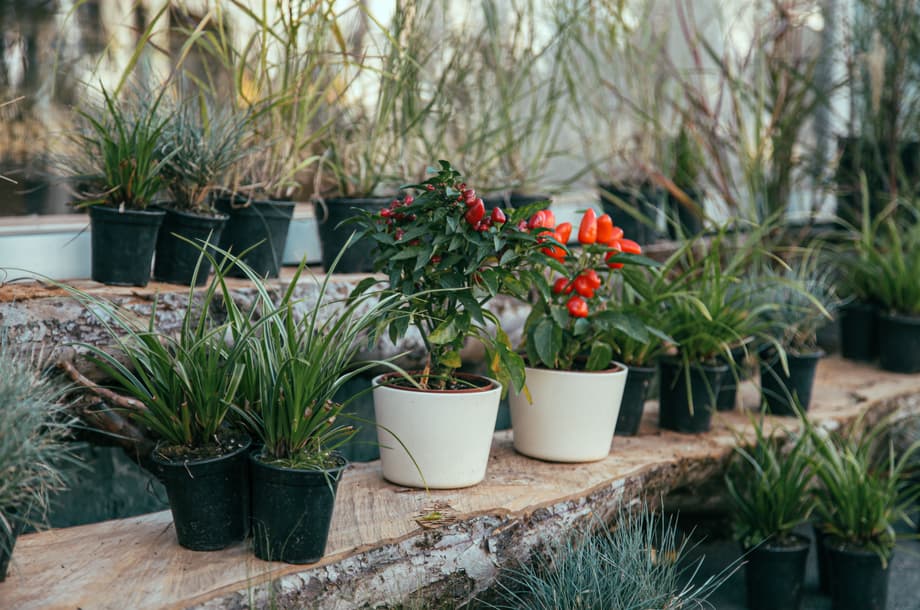
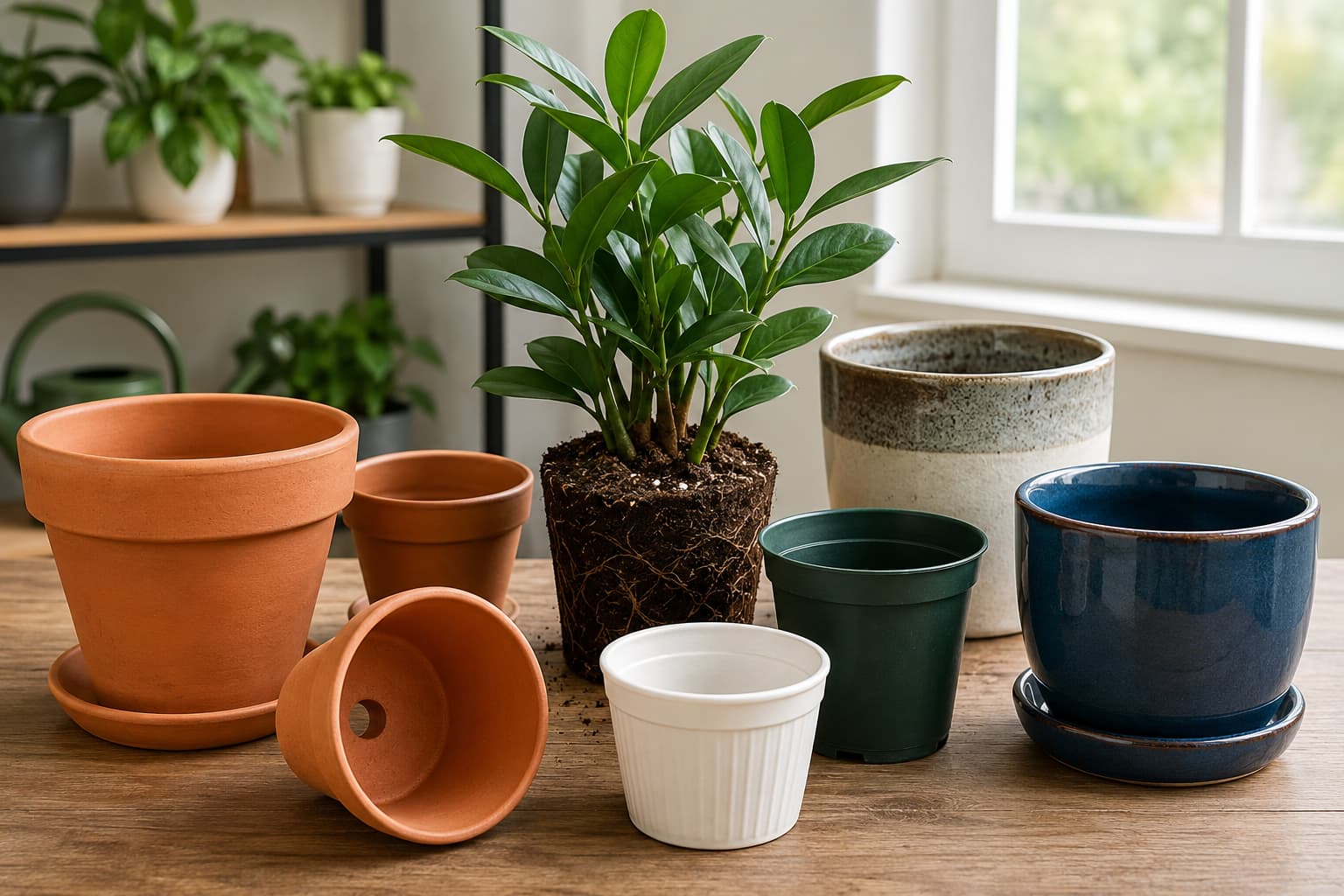
Choosing the right pots for indoor plants can make the difference between a houseplant that thrives and one that constantly struggles. The right pot affects drainage, soil moisture, root growth, plant stability, and watering frequency—not just how your plant looks in your home. Here’s how to choose a pot that supports healthy indoor plant growth.
For most houseplants, the best starting point is simple: choose a container that is appropriately sized for the root system, has reliable drainage, and suits the plant’s moisture needs. A beautiful pot that holds excess water or is much too large for the plant can create more problems than it solves.
New to houseplants? Indoor plant care for beginners doesn’t have to be complicated. Learn the essentials of light, watering, soil, feeding, repotting, and everyday care to keep your houseplants healthy and thriving.
This guide explains how to choose the right pots for indoor plants, including pot size, drainage holes, depth, shape, and materials such as terracotta, plastic, ceramic, and metal. You’ll also learn when a decorative pot can be used without drainage and how to avoid common potting mistakes.
What Is the Best Pot for an Indoor Plant?
For most indoor plants, choose a pot that:
• Is only moderately larger than the current root ball or container
• Has at least one effective drainage opening
• Is deep enough to accommodate the plant’s root system
• Is stable enough to support the plant without tipping
• Holds a suitable potting mix without becoming excessively wet
• Matches the plant’s watering needs and your growing conditions
If you’re repotting a plant, a modest increase in container size is usually safer than moving it into a dramatically larger pot. University of Illinois Extension recommends moving up approximately 1–2 inches (2.5–5 cm) in diameter for many houseplants, while the RHS similarly recommends a relatively small increase rather than excessive potting-on.
The biggest mistake is choosing a pot based only on the size of the plant above the soil. The root ball and the plant’s water requirements matter more.
What Makes a Good Pot for Indoor Plants?
A good indoor plant container has to perform several jobs at once.
1. It gives the roots enough room
Roots need space to grow and access water, nutrients, and oxygen. A severely cramped container can restrict root development and eventually affect the plant’s growth.
However, more space isn’t automatically better.
A small plant placed in a very large container has a relatively large volume of potting mix compared with its root system. If you water the entire container, that unused mix can remain wet for an extended period. University of Illinois Extension specifically warns against over-potting because excess wet mix can contribute to poor growth and root problems.
2. It allows excess water to escape
For ordinary houseplants grown in potting mix, drainage is one of the most important features of a container.
A drainage hole provides a pathway for excess water to leave the pot, helping maintain air-filled spaces in the growing medium. Poorly drained, saturated media contain less air for roots.
3. It suits the plant’s moisture requirements
Different plants tolerate different moisture levels.
A drought-tolerant succulent generally benefits from a container and growing medium that dry relatively quickly. A moisture-loving tropical plant may be more comfortable in a setup that retains moisture somewhat longer.
That doesn’t mean one material is universally “best.” Pot material, pot size, growing medium, light, temperature, humidity, and watering habits all interact.
4. It is physically stable
A tall plant in a tiny, lightweight container can become top-heavy.
A stable container is particularly important for larger foliage plants, plants placed in busy areas, and plants growing near windows or where they might be bumped.
How to Choose the Right Pot Size for Indoor Plants
Pot size is one of the most important decisions you can make when repotting an indoor plant.
The ideal size isn’t determined simply by how large the leaves look. Instead, consider the current container, root ball, plant growth rate, and moisture requirements.
How Big Should a Pot Be for Indoor Plants?
As a general starting point, when moving a houseplant into a larger container, choose a pot only modestly larger than the existing one.
For many houseplants, increasing the diameter by approximately 1–2 inches (2.5–5 cm) is a practical guideline. The RHS also recommends relatively modest increases when potting on, noting that for containers under 25 cm (10 inches), an increase of around 2.5–5 cm in width and depth is appropriate.
For example:
| Current Pot Diameter | Reasonable Next Size |
| 4 Inches | About 5–6 inches |
| 6 Inches | About 7–8 inches |
| 8 Inches | About 9–10 inches |
| 10 Inches | About 11–12 inches |
These aren’t rigid rules for every plant. Root structure, species, growth rate, container shape, and growing conditions can change the appropriate choice.
Why not jump from a 6-inch pot to a 12-inch pot?
It might seem efficient because the plant will supposedly have “room to grow.”
But the additional potting mix also holds additional water.
If the plant’s roots occupy only a small portion of the new container, the surrounding medium can stay wet after watering. This is particularly problematic when the plant is growing slowly or the indoor environment provides relatively low light and cool temperatures.
The Royal Horticultural Society (RHS) describes this as overpotting and notes that an excessively large container can create problems when plants are not growing strongly or when they are watered frequently.
In-case you are in doubt, go slightly larger—not dramatically larger.
Should the Pot Size Match the Plant’s Size?
Not exactly.
A large-looking plant doesn’t necessarily need a huge container, and a compact plant may have a substantial root system.
The more useful question is:
Does the container provide appropriate space for the plant’s roots without leaving an unnecessarily large volume of wet potting mix?
For a plant you’re considering repotting, inspect the roots if practical.
Signs that a plant may have outgrown its container can include:
• Roots emerging from drainage holes
• Roots tightly circling the root ball
• The plant drying out unusually quickly
• Noticeably slowed growth during an otherwise favorable growing period
• The root ball becoming extremely dense
Penn State Extension recommends examining the roots when plants show signs such as roots growing through drainage holes, very rapid drying, or slowed growth.
If you’re unsure whether your plant actually needs a larger pot, don’t repot simply because the container looks small.
How Deep Should an Indoor Plant Pot Be?
Diameter and depth are not the same thing.
A pot can be wide and shallow, narrow and deep, or somewhere between the two.
The appropriate shape depends partly on the plant’s root system and the stability required by the plant.
1. Shallow pots
Shallow containers can work well for plants with relatively shallow root systems and for certain drought-tolerant plants.
However, because they contain less growing medium, they may dry out more quickly.
2. Deep pots
Deep containers can provide more vertical root space, but they aren’t automatically better.
If the plant doesn’t need the additional depth, a deep container can simply provide more growing medium that needs to be managed.
3. Tall plants
Tall plants may need a container with enough weight and stability to prevent tipping.
Container shape influences stability. Illinois Extension notes that broader bases generally provide better stability, while some narrow or top-heavy configurations are more prone to tipping.
Choose pot depth according to the root system, while choosing overall shape with both root space and stability in mind.
Why Drainage Holes Matter So Much
If there is one feature I would prioritize when choosing a container for an ordinary indoor plant, it is effective drainage.
Do Indoor Plants Need Pots With Drainage Holes?
For most houseplants grown in conventional potting mix, yes.
A drainage hole allows excess water to leave the growing medium rather than remaining trapped at the bottom of the container.
When growing media remain saturated, the amount of oxygen available around the roots decreases. Illinois Extension describes drainage holes as critical because they allow water to drain and help maintain adequate air around roots.
The RHS likewise states that containers should have drainage holes to allow water to escape.
This is especially important for beginners because overwatering isn’t simply about how much water you pour onto a plant.
It is also about how long the roots remain in wet conditions.
Are More Drainage Holes Always Better?
Not necessarily.
The important thing is that the container provides effective drainage appropriate to the plant and potting mix.
A pot doesn’t need dozens of holes to be successful.
What matters is whether excess water can escape and whether the potting medium is appropriate for the plant.
Also check that the drainage opening isn’t blocked by:
• A tightly compacted surface
• A saucer pressed against the opening
• Another container
• Debris
• Roots or old potting mix
A drainage hole is only useful if water actually has somewhere to go.
What About Pots Without Drainage Holes?
Decorative containers without holes are often called cachepots, overpots, or pot covers.
They’re useful—but they’re usually better treated as outer containers rather than the actual growing container.
A practical method is:
1. Grow the plant in a nursery or inner pot with drainage holes.
2. Place that pot inside the decorative container.
3. Water the plant appropriately.
4. Allow excess water to drain completely.
5. Empty accumulated water from the outer container.
Penn State Extension specifically recommends using a drainage container inside decorative pots that lack holes, rather than planting the houseplant directly into the non-draining container.
This arrangement gives you both:
healthy drainage + attractive décor.
Important warning
Don’t assume that putting a drainage pot inside a decorative container automatically solves the problem.
If water collects at the bottom of the outer pot and the inner pot sits in that water, the drainage system is effectively compromised.
After watering, check the cachepot and remove excess water.
The Gravel-at-the-Bottom Myth
You’ve probably heard this advice:
Put a layer of gravel or stones at the bottom of the pot to improve drainage.
For ordinary potted plants, don’t rely on this technique.
This is a widespread gardening myth.
University Extension guidance explains that placing coarse material beneath fine potting media doesn’t automatically improve drainage. Instead, water can accumulate in the finer growing medium above the coarse layer before moving downward.
So if your pot is too deep, don’t use gravel to “take up space” in an attempt to make the drainage better.
What should you do instead?
Use:
• An appropriately sized container
• A quality potting mix suited to the plant
• An actual drainage opening
• A saucer or waterproof surface underneath when necessary
If you’re worried about potting mix escaping through a large drainage opening, a small piece of suitable mesh can be used without creating a thick drainage layer.
Best Pot Materials for Indoor Plants
There is no single best pot material for indoor plants.
The right material depends on how you water, how quickly the plant’s growing medium should dry, the plant’s size, and the environment in which it will grow.
The four materials most indoor gardeners encounter are:
• Terracotta
• Plastic
• Glazed ceramic
• Metal
Let’s look at their practical differences.
1. Terracotta Pots
Terracotta is unglazed fired clay and is naturally porous.
That porosity allows some moisture to move through the container walls, so terracotta generally dries more quickly than nonporous containers.
Advantages:
• Helps the growing medium dry more readily
• Heavy enough to provide useful stability
• Classic appearance
• Particularly useful for plants that dislike prolonged wet conditions
Disadvantages:
• Can require more frequent watering
• May develop mineral deposits on the surface
• Can break if dropped
• Heavy compared with thin plastic
Terracotta can be particularly useful for plants that benefit from a faster drying cycle, including many succulents. Penn State Extension notes that clay containers tend to draw water and soluble salts from the potting mix and therefore generally require more frequent watering than plastic containers.
Best suited to
Consider terracotta when you tend to overwater, your plant prefers relatively fast drying, or you want a heavier container.
2. Plastic Pots
Plastic pots are lightweight and generally nonporous.
They don’t lose moisture through the container walls in the same way unglazed terracotta does.
Advantages:
• Lightweight
• Inexpensive
• Easy to move
• Retains moisture longer than porous clay
• Available in many sizes
• Often includes good drainage designs
Disadvantages:
• Can make it easier to keep moisture-loving plants wet for too long if watering isn’t adjusted
• Lightweight pots may be less stable for very large plants
• Some inexpensive plastics can become brittle with prolonged exposure to sunlight
Plastic isn’t inherently inferior to terracotta.
In fact, it can be an excellent choice for indoor plants when you want more consistent moisture retention and easy handling.
3. Glazed Ceramic Pots
Glazed ceramic pots combine a decorative exterior with a relatively nonporous glazed surface.
They are popular because they can be attractive enough to function as part of the room’s décor.
Advantages:
• Attractive appearance
• Often heavier and more stable than lightweight plastic
• Wide variety of colors and shapes
• Glazed surfaces don’t behave like porous unglazed clay
Disadvantages:
• Can be heavy
• May be more expensive
• Some decorative ceramic pots lack drainage holes
• Large containers can become difficult to move
If you love a ceramic pot without a drainage hole, use it as a cachepot and keep the plant in a separate container with drainage.
4. Metal Pots
Metal containers can work indoors, particularly as decorative outer containers.
However, they’re not always the first choice for directly growing a houseplant.
Consider:
• Whether the container has drainage
• How easily it conducts heat
• Whether it is designed to resist corrosion
• Its weight and stability
• Whether an inner nursery pot can be used
For many indoor situations, a plastic or terracotta growing pot placed inside a decorative metal container is simpler to manage.
Terracotta vs. Plastic: Which Is Better?
Neither is universally better.
The better choice depends on your watering habits and the plant’s moisture requirements.
| Feature | Terracotta | Plastic |
| Moisture Retention | Lower | Higher |
| Drying Speed | Generally Faster | Generally Slower |
| Weight | Heavier | Lighter |
| Stability | Generally Good | Varies |
| Durability | Can Break | Usually Resistant to Breakage |
| Best for | Plants that benefit from faster drying | Plants that prefer more consistent moisture |
| Ease of moving | Lower | Higher |
A beginner who frequently waters plants too soon may find terracotta more forgiving for plants that prefer drying between waterings.
Someone who struggles to keep moisture-loving plants hydrated may prefer plastic.
But pot material does not replace proper watering.
Choosing a Pot for Different Indoor Plant Types
Different plants can benefit from different container characteristics.
1. Succulents and Cacti
These plants generally benefit from very free-draining growing media and containers that don’t encourage prolonged wetness.
Royal Botanic Gardens, Kew recommends very free-draining, gritty growing media for cacti and succulent houseplants and cautions against excessively large containers because excess growing medium can stay too wet and contribute to rot.
A terracotta pot with an effective drainage hole can be a practical choice.
2. Snake Plants
Snake plants are relatively drought-tolerant and don’t need a pot that stays wet for long periods.
A container with drainage and a well-draining potting mix is more important than choosing a particular material.
For a healthy plant, avoid selecting a dramatically oversized pot simply because the plant is tall.
Snake plants are among the easiest houseplants to grow, but even tough plants need the right care. Learn the essentials of light, watering, soil, repotting, and common problems with this complete snake plant care guide.
3. ZZ Plants
ZZ plants also have thick underground rhizomes that store water, so consistently wet conditions are undesirable.
A pot with reliable drainage and an appropriately sized container is more important than choosing an expensive decorative material.
ZZ plants are wonderfully low-maintenance, but the right care can make them healthier and more attractive. Learn the essentials of light, watering, soil, feeding, and repotting with these 11 zz plant care secrets.
Tropical Foliage Plants
Many tropical foliage plants appreciate a more consistent moisture supply than succulents.
A plastic or glazed ceramic pot can therefore be convenient, particularly if your indoor conditions cause potting mix to dry quickly.
But don’t assume every tropical plant wants constantly wet soil. Species differ, and good drainage remains important for most conventional houseplants.
Pot Shape Matters Too
Pot material and diameter get most of the attention, but shape can affect practical performance.
Wide, stable pots
Useful for:
• Large plants
• Top-heavy plants
• Plants that need a stable base
• Locations where the container could easily be knocked over
Narrow, tall pots
These can look elegant but may become unstable when paired with a tall plant.
Tapered pots
Traditional nursery pots often taper toward the base, which makes plants easier to remove.
Very unusual shapes can create problems during future repotting.
The University of Florida IFAS Extension (Gardening Solutions) notes that some urn-shaped containers can make removing a root ball difficult because the container is wider in the middle than at the opening.
Before buying a beautiful unusual container, ask:
Will I be able to remove the plant from this pot when it needs repotting?
If the answer is no, the container may become a long-term headache.
Should You Use a Nursery Pot Inside a Decorative Pot?
Yes. This is one of the most practical setups for indoor plants.
A nursery pot with drainage holes provides the functional growing environment.
The decorative container provides the appearance.
This is sometimes called double potting or using a cachepot.
Benefits:
• Easy to inspect roots
• Easy to remove the plant
• Easy to drain after watering
• Protects furniture
• Lets you change decorative containers without disturbing the plant
• Makes it possible to use beautiful containers that don’t have drainage holes
The key is to prevent the inner pot from sitting permanently in accumulated water. Illinois Extension and Penn State Extension both describe this approach while emphasizing the need to remove excess water from the outer container.
How to Choose the Right Pot: A Simple Decision Guide
If you’re standing in a garden center trying to choose between several containers, use this checklist.
Step 1: Check the current root system
If the plant doesn’t need repotting, you may not need a larger pot at all.
If it does, inspect the root ball when practical.
Step 2: Choose the next appropriate size
For many houseplants, move up approximately 1–2 inches in diameter, rather than making a dramatic jump.
Step 3: Check for drainage
Look underneath.
Don’t assume a decorative opening, saucer, or raised base means the container drains properly.
Step 4: Consider the plant’s moisture requirements
Ask:
• Does this plant prefer to dry somewhat between waterings?
• Does it prefer more consistent moisture?
• How bright is the growing location?
• How often do I realistically water?
Step 5: Choose the material
Terracotta: faster drying and heavier.
Plastic: lightweight and moisture-retentive.
Glazed ceramic: attractive and relatively moisture-retentive.
Metal: often best used as a decorative outer container unless specifically designed for planting.
Step 6: Consider stability
For a tall plant, choose a container with an appropriate base and enough weight to prevent tipping.
Step 7: Think about future repotting
Avoid a container whose shape will trap the root ball.
A Practical Example: Choosing a Pot for a Root-Bound Houseplant
Imagine you have a healthy indoor plant growing in a 6-inch nursery pot.
You’ve noticed roots emerging from the drainage holes, and when you slide the plant out, the root ball is densely filled with roots.
You decide the plant needs more room.
Poor choice
A 12-inch decorative pot with no drainage hole.
Why?
The pot is much larger than necessary, and the lack of drainage makes water management difficult.
Better choice
An approximately 7–8-inch pot with effective drainage.
Then choose a suitable potting mix and move the plant into the new container.
If you want the appearance of a larger decorative pot, place the functional growing pot inside it.
This approach gives you:
appropriate root space + drainage + easier watering + attractive presentation.
Common Pot-Choosing Mistakes to Avoid
Avoid these common pot-choosing mistakes that can quietly harm your indoorplants. Learn how to choose the right size, drainage, material, and shape for healthier roots and easier indoor plant care.
1. Choosing the Biggest Pot You Can Afford
Bigger isn’t always better for your houseplants. An oversized pot can hold excess moisture around a small root system, increasing the risk of prolonged wet soil. Choose a pot that gives the roots room without overwhelming them with excess growing medium.
2. Choosing a Pot With No Drainage Because It Looks Better
A beautiful pot without drainage can quickly become a watering problem. Instead of sacrificing plant health for style, use the attractive container as a cachepot and keep your plant in a properly sized inner pot with reliable drainage.
3. Putting Gravel at the Bottom to Improve Drainage
Adding gravel to the bottom of a pot may sound like a smart drainage solution, but it’s a common gardening misconception. Skip the gravel layer and focus on the basics: an appropriately sized container, quality potting mix, and an actual drainage opening.
4. Choosing Based Only on Appearance
A pot can look perfect on a shelf and still be completely wrong for your plant. Before choosing based on color, shape, or style, consider drainage, size, depth, material, and stability. The best pot balances attractive design with the plant’s growing needs.
5. Ignoring Pot Depth
Pot diameter tells only part of the story. A container can have the right width but still provide unsuitable depth for the plant’s root system. Consider how the roots grow, how much potting mix the container holds, and how quickly it will dry before choosing.
6. Using the Same Watering Routine After Changing Pot Materials
Changing pot materials can change how quickly your plant’s potting mix dries. A plant moved from porous terracotta into plastic may retain moisture longer. Don’t follow the same watering schedule automatically—check the growing medium and adjust as needed.
7. Letting the Inner Pot Sit in Water
A drainage hole cannot do its job if excess water has nowhere to go. If your plant sits inside a saucer or decorative cachepot, check for accumulated water after watering and empty it promptly to prevent the root zone from remaining unnecessarily wet.
8. Choosing an Unstable Pot for a Tall Plant
A tall, top-heavy houseplant needs more than a beautiful container—it needs stability. A narrow or lightweight pot can tip easily, damaging the plant or creating a mess. Choose a container with a broad, stable base and enough weight to support the plant securely.
Choosing the right pot is only part of creating a thriving indoor garden. Discover the 25 best indoor plants in Nigeria and learn how to choose varieties that suit your indoor conditions, lighting, and care routine.
How Pot Choice Affects Watering
One of the most overlooked consequences of changing pots is that your watering schedule may need to change.
Suppose you move a plant from:
small terracotta pot → larger plastic pot
The new setup may retain moisture considerably longer.
If you continue watering on exactly the same schedule, you could unintentionally keep the root zone too wet.
The reverse can also happen:
plastic pot → porous terracotta pot
The growing medium may dry faster, particularly in a warm, bright indoor location.
This is why you shouldn’t water simply because a calendar says it is “watering day.”
Instead, monitor the growing medium and the plant’s condition.
Choosing the right pot can make watering easier, but knowing when and how much to water matters just as much. Learn how to water indoor plants properly, avoid overwatering, and keep your roots healthy with this beginner-friendly guide.
Pot Size, Soil and Drainage Work Together
It’s tempting to think of the pot as an independent decision.
It isn’t.
Three things work together:
Pot size
Determines how much growing medium surrounds the roots.
Potting mix
Determines how readily water moves through and how much moisture is retained.
Drainage
Determines whether excess water has a pathway out of the container.
For example, an oversized pot containing a moisture-retentive mix and a plant with low water demand creates a very different situation from a correctly sized terracotta pot containing a fast-draining mix.
This is why choosing the “best pot” without considering the whole growing system can be misleading.
The right pot is only half the equation—your potting mix matters just as much. Learn how to choose the best soil for indoor plants, improve drainage and moisture balance, and create a healthier growing environment for strong, thriving roots.
When Should You Replace an Indoor Plant Pot?
A container doesn’t necessarily need replacing just because it looks old.
Consider replacing or changing it when:
• The container is cracked or damaged
• Drainage has become inadequate
• The plant has outgrown the container
• The shape makes repotting difficult
• The pot has become unstable
• The growing setup no longer matches the plant’s needs
Sometimes the best solution isn’t a bigger pot.
If the plant has reached a desirable size, you may be able to refresh the growing medium and manage the root system instead of continually increasing the container size. The Missouri Botanical Garden notes that some container-grown plants can remain in the same-sized container when roots are appropriately managed and the growing medium is refreshed.
What to Do After Choosing a New Pot
Once you’ve selected the right container, don’t rush the planting process.
If you’re repotting:
1. Prepare a suitable potting mix.
2. Make sure the new container is clean.
3. Confirm that drainage holes are open.
4. Remove the plant carefully.
5. Inspect the roots.
6. Position the root ball at an appropriate height.
7. Add fresh potting mix around it.
8. Avoid burying the stem or crown unnecessarily.
9. Water thoroughly if appropriate for the plant and allow excess water to drain.
10. Return the plant to a suitable growing location.
Repotting can give your indoor plants a fresh start—but one wrong move can damage delicate roots. Learn how to repot indoor plants safely, protect the root system, and help your plant settle into its new container.
The goal isn’t simply to put the plant into a new container.
It’s to create a healthier relationship between roots, potting mix, water, air, and container space.
Frequently Asked Questions About Pots for Indoor Plants
1. What are the best pots for indoor plants?
For most houseplants, the best pots have adequate drainage, an appropriate size, sufficient stability, and a material suited to the plant’s moisture needs. Terracotta, plastic, and glazed ceramic can all work well when used appropriately.
2. How big should a pot be for indoor plants?
When repotting many houseplants, moving up approximately 1–2 inches in diameter is a useful starting point. The appropriate size can vary according to the plant, root system, growth rate, and container shape.
3. Do all indoor plant pots need drainage holes?
Most conventional indoor plants grown in potting mix should be grown in containers that allow excess water to drain. Decorative pots without holes are best used as outer containers around a functional pot with drainage.
4. Is terracotta or plastic better for indoor plants?
Neither is universally better. Terracotta generally dries faster because it is porous, while plastic retains moisture longer. Choose according to the plant’s water requirements and your growing conditions.
5. Can I put an indoor plant directly into a decorative pot without drainage?
It is possible in specialized setups, but it is generally less forgiving for ordinary houseplants. A safer approach is to keep the plant in a drainage pot and place that container inside the decorative pot.
6. Should I put rocks in the bottom of an indoor plant pot?
No. A layer of rocks or gravel beneath potting mix does not improve drainage in the way many people assume and can actually interfere with water movement through the growing medium.
7. Does a bigger pot make an indoor plant grow faster?
Not necessarily. A larger container can provide additional root space when a plant is genuinely root-bound, but unnecessarily large pots can keep excess growing medium wet and create unfavorable conditions for roots.
8. Should indoor plant pots be deep or wide?
It depends on the plant’s root system and growth habit. Choose enough depth for healthy root development while considering stability and how quickly the container will dry.
9. Can I use a nursery pot inside a ceramic pot?
Yes. This is an excellent way to combine reliable drainage with decorative presentation. Just make sure excess water doesn’t remain pooled inside the outer container.
10. How do I know if my plant needs a bigger pot?
Look for signs such as roots emerging from drainage holes, a densely congested root ball, unusually rapid drying, or reduced growth during a favorable growing period. Inspecting the roots is often the most reliable way to determine whether the plant is genuinely root-bound.
Conclusion
The key is to choose a pot that properly accommodates the plant’s root system—not simply one that looks beautiful or complements your décor. Aesthetics matter, but the pot’s size, drainage, and overall suitability for the roots should always come first.
The best pots for indoor plants aren’t necessarily the most expensive, largest, or most attractive. The right pot is the one that creates a healthy root environment while making watering and everyday plant care easier.
A well-chosen container gives roots access to both moisture and oxygen without keeping the potting mix unnecessarily saturated. That balance is essential for preventing common problems such as poor drainage, root stress, and overwatering.
When choosing a pot, keep these five principles in mind:
Choose the right size. Avoid dramatically over-potting a small root system, as excess soil can stay wet longer than the roots can use it.
Prioritize drainage. For most houseplants, excess water needs a reliable way to escape through drainage holes.
Match the material to moisture needs. Terracotta generally dries faster than plastic or glazed ceramic, making material an important part of your watering strategy.
Consider shape and stability. A pot should support the plant without making it prone to tipping or difficult to remove during repotting.
Think about the entire growing system. Pot size, material, potting mix, light, temperature, and watering habits all work together to determine how the root environment behaves.
If you’re unsure which container to choose, a simple nursery pot with drainage holes placed inside a decorative cachepot is one of the most practical and flexible solutions for indoor gardening. It allows you to prioritize plant health without sacrificing the appearance of your space.
Ultimately, there is no universally perfect pot. The goal is to choose a container that suits the plant’s root system, moisture requirements, potting mix, and growing environment. Get those factors right, and your pot becomes more than decoration—it becomes part of what helps your indoor plant thrive.
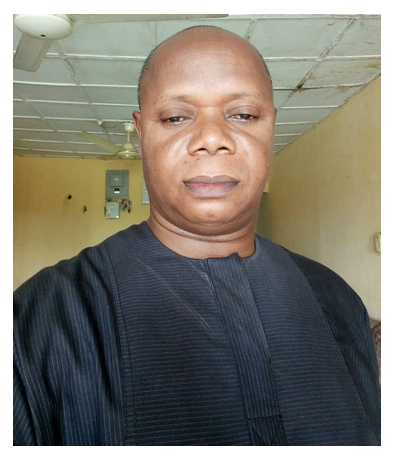
About the Author: Emebu Blessing Oghale
Emebu Blessing Oghale is an expert SEO content writer, digital creator, and indoor gardening enthusiast based in Asaba, Nigeria. Combining horticultural principles with years of digital media experience, he founded Indoor Plant Guide to provide practical, beginner-friendly troubleshooting tips for plant parents across West Africa and beyond. When he isn’t cultivating tropical houseplants, he serves his local community as a pastor at Living Faith Church.